
Peat-free coco substrate for greenhouses

Slabs, grow bags, blocks and briquettes for greenhouses and berry farms, buffered for your crop. Shipped by the container and by the pallet.

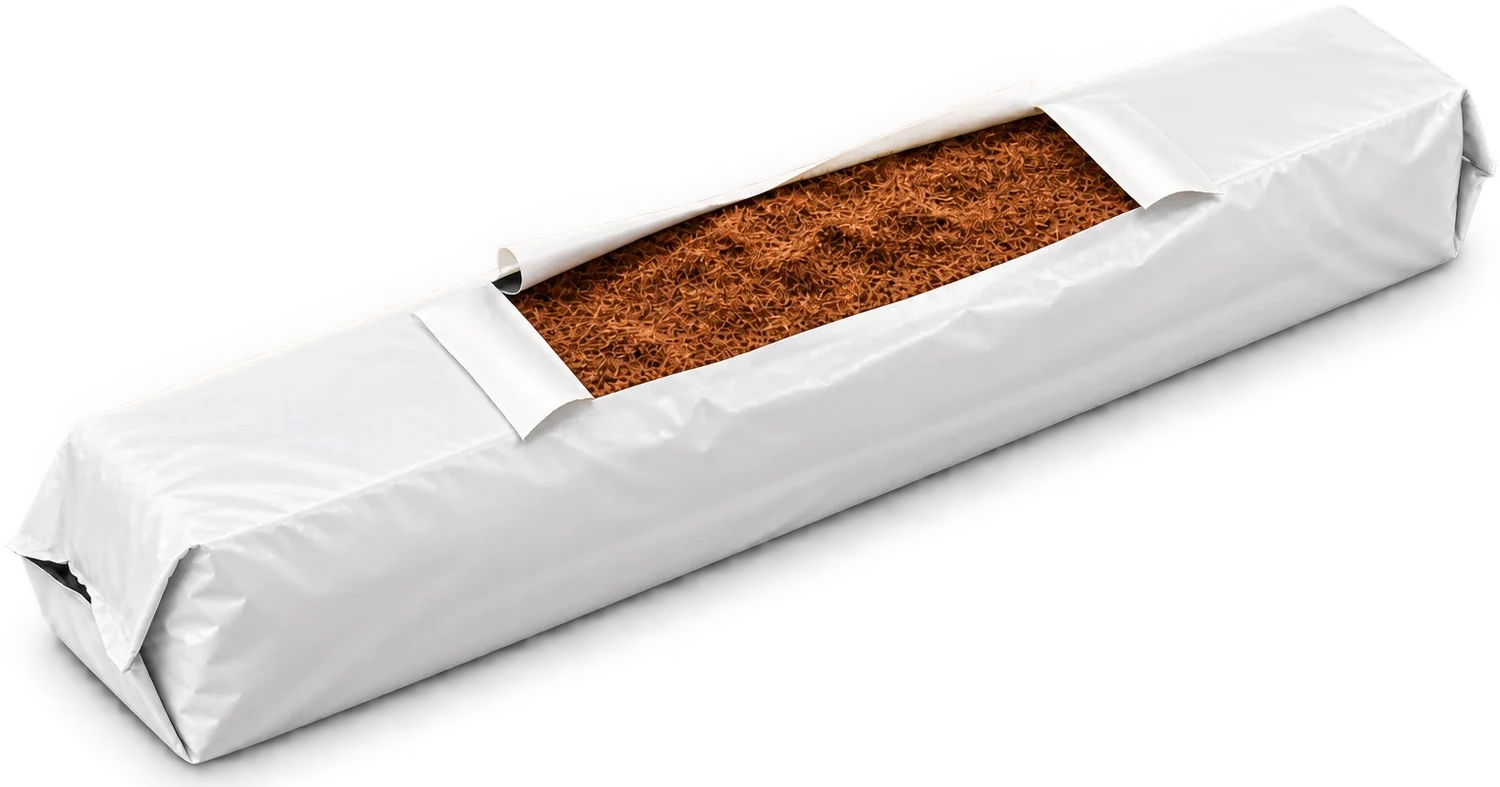
A coco slab in white film, cut open on top to show the substrate inside

A fully integrated chain — from our own plantations to the loaded container.

  • 1878the year the producer was founded
  • 13factories in Sri Lanka and India
  • 1.2Mslabs a month
  • 5,000+tof raw material in stock

Four formats of coco coir substrate

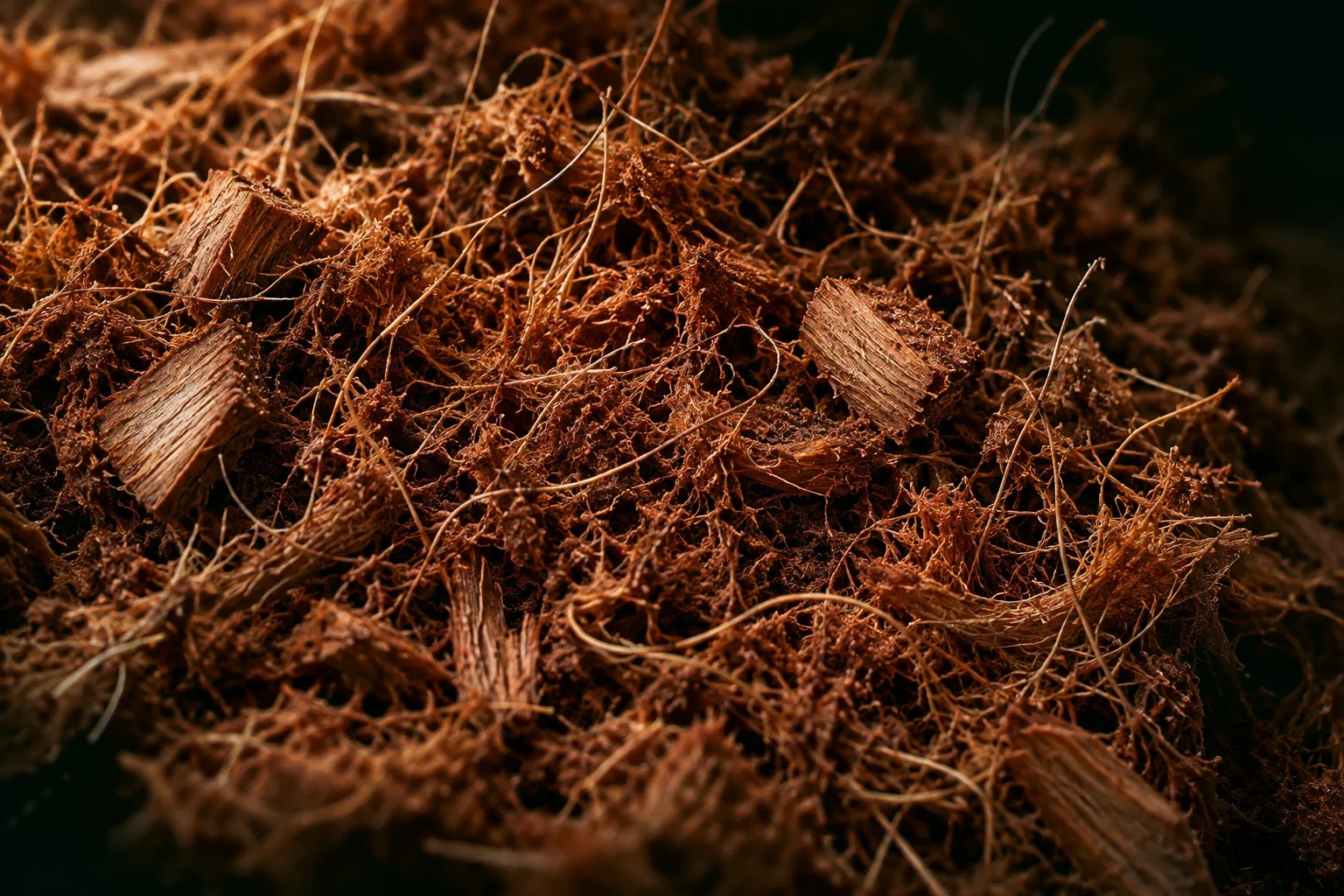
Cocopeat and chips blended to each crop’s need for water and air. From greenhouse slabs to briquettes for potting mixes — buffering available in every format.

Buffering availableCustom size — up to 120 × 25 × 25 cm

01

Coco grow slabs

Greenhouses and nurseries: cucumber, tomato, pepper, strawberry

UV-treated wrapped slabs with holes for propagation cubes. Wrapped or unwrapped, sized to your planting layout.

Packaging life
2–⁠5 years
Per 40 ft HC
up to 16,000 units
Size range
L × W × H, cmVolume, LPer palletPer 40 ft HC
100 × 20 × 1020~500~10,000
100 × 18 × 1425.2~380~9,120
100 × 15 × 1218~600~12,000
100 × 15 × 1015~725~14,500
100 × 13 × 1013~800~16,000
75 × 18 × 1418.9~460~11,040

Custom sizes up to 120 × 25 × 25 cm.

02

Open-top grow bags

Berry farms and nurseries: blueberry and other soft fruit

A ready container of substrate: place it on the line, saturate it and plant. Volume matched to the age and variety of the bush.

Volume
8–⁠36 L
Per 40 ft HC
6,000–⁠24,500 units
Size range
Size, cmVolume, LPer palletPer 40 ft HC
20 × 20 × 208~1,200~24,500
25 × 25 × 2515.6~650~13,000
30 × 30 × 3027~350~7,000
30 × 30 × 4036~300~6,000
03

Coco blocks

Nurseries and growing-media producers

A pressed 5 kg block: compact to ship and store, and 65–70 L of loose substrate once soaked — for mixes, propagation and pot culture.

Weight
5 kg
Once soaked
65–⁠70 L
Size range
Size, cmWeightPer palletPer 40 ft HC
30 × 30 × 145 kg~240~4,800
04

Briquettes

Propagation, small volumes, retail mixes

The same substrate in a small format: a 650 g briquette makes 6–7 L. Loose or in cartons of 24.

Weight
650 g
Once soaked
6–⁠7 L
Size range
ItemSize, cmPer palletPer 40 ft HC
Loose20 × 10 × 5~2,000~40,000
Carton of 2420 × 10 × 5~81 cartons~38,880

Ready blends by crop

Three lines with set EC, pH and water-to-air balance. For cucumber and other crops we match the blend to your greenhouse and irrigation.

  • StrawberrySlabs

    Berry Pro

    More water: the blend holds moisture while keeping the aeration strawberry roots need.

    EC
    < 0.5 mS/⁠cm
    pH
    5.5–⁠6.5
    Moisture
    < 20%
  • BlueberryGrow bags

    Berry Pro MAX

    More air: for blueberries, which need high aeration with enough water in reserve.

    EC
    < 2.5 mS/⁠cm
    pH
    5.5–⁠6.5
    Moisture
    < 20%
  • TomatoSlabs

    Red Pro

    High aeration and even moisture — built around tomatoes in low-volume growing.

    EC
    < 2.5 mS/⁠cm
    pH
    5.5–⁠6.5
    Moisture
    < 20%
  • Cucumber

    Cucumber blend — on request

    The main crop of winter greenhouses. We match the pith-to-chips ratio to your irrigation, lighting and cycle, and prove it on a trial batch.

    Get a cucumber blend
  • Pepper, herbs, flowers, seedlings

    A blend for your crop

    Send us your current substrate spec or describe the job — we will suggest an equivalent and a supply format.

    Describe the job

Pith holds water, chips let in air

The fine fraction, cocopeat, works like a sponge. The coarse one, husk chips, keeps pores open for air and drainage. The ratio between them is the recipe for a crop.

PithMore water
Berry ProWater 60%Red ProWater 52%Berry Pro MAXWater 50%
ChipsMore air
  1. 01

    Buffering

    A calcium treatment drives sodium and potassium out of the fibre, so the substrate neither locks up calcium and magnesium nor releases salts to the roots.

  2. 02

    Washing and EC

    The substrate is washed to a set conductivity: Berry Pro ships below 0.5 mS/⁠cm, so the crop starts without a salt shock.

  3. 03

    Moisture < 20%

    Dried on a concrete yard before pressing: less weight in the container and a steady volume once saturated.

From huskto slab

Five production steps — from husk on the plantation to a slab in your greenhouse.

01 05 · Husk

5,000+ t

Coconut husk from Sri Lankan plantations is milled and dried on the producer’s own 20 ha yard.

02 05 · Sorting

< 0.5 mS/⁠cm

Fine pith and coarse chips are separated, washed to a set EC and buffered with calcium.

03 05 · Pressing

65–⁠70 L

The mix is dried to under 20 % moisture and pressed into a 30 × 30 × 14 cm block.

04 05 · Slab

2–⁠5 years

A 100 × 20 × 10 cm slab in film, with holes for propagation cubes.

05 05 · The row

up to 16,000

The producer makes 1.2 mln slabs a month, shipped by the container and the pallet.

Coco, stone wool and peat

The real choice in a greenhouse is between these three. We compared them on what matters in practice.

CocoStone woolPeat
Raw materialCoconut husk — a renewable by-productBasalt and slag, melted and spun into fibrePeat bogs that take centuries to recover
Water and airTuned by the ratio of pith to chipsFixed by the slab’s densityHolds water well, hard to re-wet once dry
Buffering, EC and pHStable once buffered, pH 5.5–⁠6.5Inert: everything comes from the solutionAcidic, needs liming
Service lifeUV-treated slab packaging — 2–⁠5 yearsUsually one or two cyclesUsually a single season
ShippingPressed, under 20% moisture — compactLight but bulkyBulky, shipped moist
End of lifeOrganic: composts, goes back into soilDoesn’t break down, needs special recyclingComposts

Stone wool is familiar to steer, peat is cheaper in potting mixes. Coco wins where service life, buffering and what happens after the cycle matter.

Switching from stone wool

A coco slab holds more water low down and releases it more gently. In the first weeks, shots get shorter and more frequent, and drainage is steered by EC. Saturate the slab fully before planting. We will help you rework the irrigation plan at the start.

From plantation to container, in one pair of hands

Substrate often passes through five or six companies, each with its own standard. With us there are two: the producer and us.

Best exporter of coco coir substrateSri Lanka’s Presidential Export Award, 2023/24

6companies — common on the market

Husk collector

Drying yard

Factory

Exporter

Importer

Distributor

2companies — with us

Producer

Plantations, drying, raw stock, 13 factories, port of Colombo

Tochka Rosta

Import, documents, delivery to your farm

One handoff: the container at the port of Colombo. Its route to Minsk is on the map below.

Shipped by the container

We ship containers from Sri Lanka and deliver by road to the farm. Batch size, lead times and documents are worked out for your request.

Where it is made

13 factories in western Sri Lanka and in Tamil Nadu, India.

Colombo, Sri Lanka

Head office and port. Shipped in 40 ft HC containers.

In one 40 ft HC container

  • up to 16,000slabs
  • up to 24,500grow bags
  • 4,8005 kg blocks
  • up to 40,000briquettes

A full container for a large grower, or a trial batch before the season — we quote both.

Minsk, Belarus

Then by road to the farm.

  • Documentsfor your country and region
  • EU portsdirect shipments on request

For procurement and tenders

Buying through a tender? We prepare the documents a procedure needs, so the substrate can be specified correctly.

Request a procurement pack
  • Specification

    EC, pH, water retention, porosity, sizes and packaging — ready to attach to the tender.

  • Quotation

    Price, delivery terms and lead time for the volume.

  • Batch documents

    The list of documents that ship with the goods.

  • Company profile

    Company details in one file for your vendor records.

How much substrate your greenhouse needs

Pick a crop and an area — we count the slabs, pallets and 40 ft HC containers by the manufacturer’s loads.

Crop

7,000slabs1container, 40 ft HC

14 pallets · 70% full

Based on 7,000 slabs per hectare, a typical cucumber layout. We’ll fit it to yours.

From request to the first harvest on a new substrate

  1. 01

    Request

    Crop, area or volume, current substrate and irrigation.

  2. 02

    Spec

    Format, size and blend for your greenhouse.

  3. 03

    Trial batch

    Test the substrate on your own site before a big order.

  4. 04

    Quote

    Logistics, lead time and price for the volume.

  5. 05

    Delivery

    A container or a batch to your warehouse or farm.

  6. 06

    Start-up

    Help with saturating slabs and irrigation in the first weeks.

Frequently asked

Request a quote
How long does a coco slab last?

Slab packaging is UV-treated and rated for 2–⁠5 years. Real life depends on the crop, irrigation and how slabs are stored between cycles.

What does buffering do, and do I need to wash it?

Untreated coco fibre carries sodium and potassium and binds calcium and magnesium. Buffering replaces them with calcium and washing lowers EC, so a buffered substrate can take working solution straight away.

How do I switch from stone wool?

Coco holds more water and releases it more gently, so irrigation changes: shorter, more frequent shots, steered by EC and drain volume. Start with a trial area — we will help rework the plan.

Which blend for cucumber?

There is no off-the-shelf cucumber line: we match the pith-to-chips ratio to your greenhouse, lighting and cycle. Tell us your current substrate and irrigation in the request.

How much substrate does a block or briquette make?

A 5 kg block makes 65–⁠70 L of loose substrate once soaked; a 650 g briquette makes 6–⁠7 L.

How do I dispose of used substrate?

Coco fibre is organic. Used substrate is composted or worked into soil as a conditioner; the slab’s film is removed and recycled separately.

Get a supply quote for your operation

Tell us the crop, the volume and where to deliver — we will pick the format and blend, work out logistics and send an offer.

Topic